Category Archives: social anxiety

disordered eating

Well I broke two of my rules this week: No more than one post per day and five posts per week. This is my third post today and my sixth this week–and there’s still two more days left in the week.

I’ll keep this short.

After my second post today, I felt really anxious. I immediately went home, downed .5 mg of Ativan, and watched Curb Your Enthusiasm with my girlfriend. I felt a little better afterward so I came back up to the library to work on schoolwork. My anxiety was no where near as bad as it was earlier, but I felt much more depressed.

I’m not sure where those feelings were coming from.

I think stirring up a lot of emotions from my post earlier didn’t help. Plus I’m going camping this weekend with my girlfriend, her brother, and some friends. I may have to call a friend later to coordinate a ride. I’m feeling pretty anxious about all that. Oh and I also increased my dose of Lamictal from 12.5 to 25 mg.

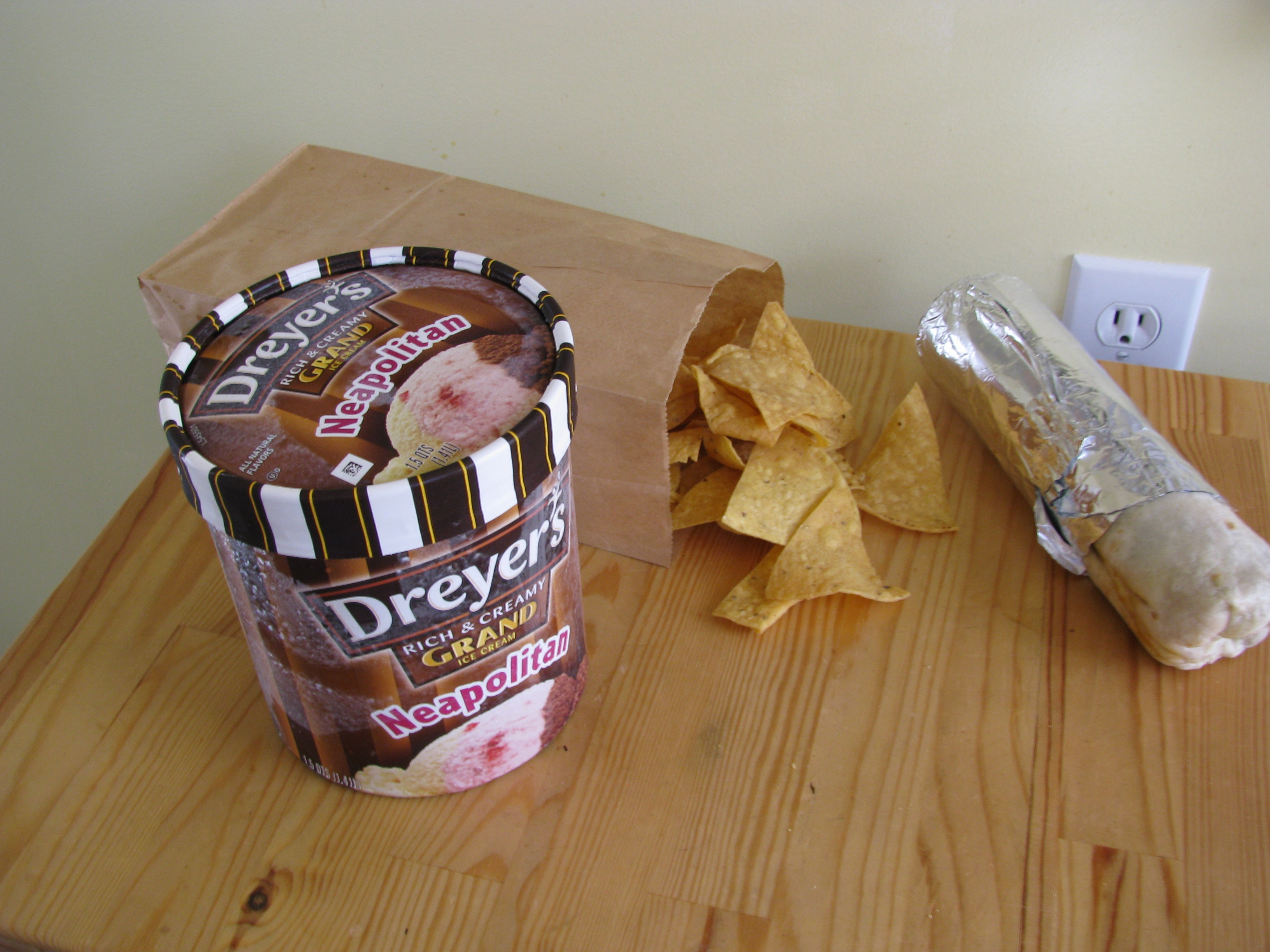
Anyway, I left the library around 5:00 and binged. Super burrito. 28 oz of ice cream. Plus a handful of kale. (I need my veggies, too.) I also drank a beer. I probably shouldn’t have drank because I took an Ativan earlier. Oh well.

That’s two binges this week. At what point does disordered eating become an eating disorder?

No more than one post per day and five posts per week

changing beliefs

My beliefs about myself and about the world have significantly changed over the past few years. But why hasn’t that lead to any significant changes? Why is my thinking still so irrational during social situations? Why is change so slow? In theory, I know I’m fine. I know I’m smart and I know I can carry on a conversation and I know I’m fairly attractive. In action though (when I’m in the midst of a social situation) I tell myself I’m an ugly idiot who can’t engage socially with others. There’s a huge disparity in how I look at myself in the comfort of my apartment or even in therapy (objectivity) versus when I’m in the middle of a group social situation (subjectivity).

I want to look at some examples. I’ll start with a belief about myself I know is true when I’m not in an anxious social situation, and then I’ll counter it with what I believe in a social situation (in bold).

  1. I am not ugly. I may not have been the best looking during my formative years, but I’ve changed. I no longer have bad acne or an under bite. People are staring at my jaw. They can see my under bite. I wish I didn’t have these scars from acne. Why do people always have to just stare at me? What can they see that I can’t?
  2. I’m intelligent, witty, funny, and interesting to talk to. People don’t want to hear what I have to say. They’ll laugh and think my opinions are stupid. I just won’t say anything at all. But I really want to say something. Maybe if I just say some joke really quickly that will be enough. Why can’t I just feel calm and relaxed and speak about myself like everyone else. Why can’t I be witty and funny like everyone else?
  3. Nobody is inherently better than me. Some people may be better at some things than I am, but I’m better at some other things. Everybody has their own strengths and weaknesses–that’s what makes us human. These people are beautiful and perfect. They have no flaws that I can see. All my flaws are exposed. People can see them. I can’t hide. They can see right through me.
  4. People are not talking about me behind my back. They are not laughing at me. They do not have a secret system setup (of glances, of nods) to subtly communicate with one other about me. People are talking about me, telling one other how awkward and stupid I am. They are also laughing about me. What else could be so funny? At the very least, everyone is having negative thoughts about me.

There’s more but I have to stop there. This is too hard for me.

So what’s going on here? If I truly believe my thoughts outside of social situations, then they should carry over into social situations. Why don’t I believe them? It’s because I tell myself that no matter what I’m going to fail. It doesn’t matter what I believe. It doesn’t matter how smart or funny I am–I’m going to fail. But I don’t think just changing those thoughts will help. I can’t just say, “I’ll be fine in this situation” or “I’m going to wake up tomorrow and not feel anxious.”

The work has to be done on changing my beliefs, but I need to have the overall belief that those changes will help–which I don’t have.

I think that changing beliefs works like this–

I state my irrational belief, then state a rational (counter) belief, and then hopefully a synthesis will occur: where I pick the truth from each belief, and hopefully that will change my overall belief to a more positive one. Once the belief has changed, I then test that belief in a social situation. So far, my new beliefs haven’t stuck and so I go right back to my old beliefs. But maybe, somewhere deep within, my beliefs have shifted a bit, and eventually the new beliefs will become set. It just takes practice and a lot of time to change–both of which I don’t feel like I have.

***

By the way, when I started writing this post I felt good. I felt calm and collected. Now I just feel terrible. I’m extremely anxious, and I feel depressed. Stirring up these thoughts hasn’t done me any good. Hopefully in the long run this blog will help, but right now, in the present, it’s doing more harm than good.

the social phobic

Aside from this blog, there just are not many others out there that deal specifically with Social Anxiety Disorder. I know I talk about other subjects on here, but the main focus is the anxiety. It’s why I created this blog. It’s what I’ve been struggling with for the past ten years or so. Sure, I’m plagued with other issues, like depression and disordered eating, but the main focus is the anxiety–all else manifests from the anxiety, in my opinion. With that said, one other blog of note, which deals specifically with social anxiety, is The Social Phobic.

I’ve been following this blog for a few months. Actually, following isn’t the right word because it hasn’t been updated since March. I’ve really just been reading the archives. I can see myself in the author’s words. It’s comforting to know there are others out there like me. One of the hardest things for me to deal with is the isolation and loneliness. I forget that others experience anxiety too, and I forget that Social Anxiety Disorder is one of the most prevalent anxiety disorders, affecting millions upon millions of people. It’s just not glamorized on TV or in movies. There are no documentaries on A&E. The disorder isn’t represented on The Real World or any other reality TV show. I can’t see myself on TV, or in any of my friends.

That’s why I think these words are so important, and that’s why I found The Social Phobic to be so enlightening. Like everyone, we need to have a voice, we need to connect, we need to be seen and heard. So when I read that first post on that blog, I knew I had to share my experiences too, and I knew I had to begin writing about those experiences in order to understand them and eventually name them.

***

I know I don’t have many readers yet, but I still want to hear from you if you’re reading this. What other sites would you recommend? Are there are other blogs out there that focus on social anxiety that I’m missing?

constancy

Maintaining friendships is very difficult for me. This is a very complicated issue and one that isn’t easy to talk about, but I’ll do my best to explain it.

It all comes down to trust. I don’t like who I am on the inside, and so I keep people at a distance because I’m afraid they’ll see who I really am and run the other way. By not letting people in though, trust does not develop. Trusting others is risky, and I think people need to put themselves out there in order to build trust. This includes opening yourself up to others by showing them who you really are, speaking your true feelings, and revealing secrets–all of which I don’t do. Without trust, relationships become disposable. There is no replacement for trust; yet, I’ve spent my whole life replacing trust with constancy.

Constancy is stability; it’s being faithful and loyal.  Constancy is part of trust, but it’s definitely not a replacement. In my case, constancy develops through repetition: the more I see somebody, the more I feel comfortable around him or her. It’s vital for my personal relationships. Without it, there is only anxiety.

So because constancy, rather than trust, is the glue holding my relationships together, my friendships never feel right. I always question them. I think the person doesn’t really like me. I think he or she is always talking negatively about me behind my back. I think he or she is always trying to find a way to get out of the friendship. I think he or she doesn’t even really like me. In reality, I am the one talking negatively about myself. I am the one trying to find a way out. I am the one who doesn’t like me.

The problems are with me, and yet instead of dealing with them, I project them onto others.

What’s more, I’m always searching for someone I can have a deeper relationship with. Everyone needs to have some deep friendships. We need someone to talk to about our feelings, someone to confide in and feel save with. I don’t get to have those things in my personal, platonic friendships so I seek out deeper, sexual relationships for my true friendships. Then once I do find that true friendship and start connecting, I abandon all of my disposable friends. I think it’s normal (to a certain degree) to desert friends when one enters into a relationship, especially at the beginning. In my case, it’s hard to view my life objectively at the start of an intimate relationship. I’m lost in euphoria, filled with happiness and excitement. When that phase is over though, people generally reconnect with friends, creating balance between their intimate relationship and platonic one’s. I however continue to cling to the sexual relationship.

So after I find a sexual partner and establish an intimate relationship I don’t reconnect with friends and so I just ignore them altogether until they eventually go away. There isn’t a malicious intent, and I’m not even really conscious of this behavior–it’s a coping technique because I lose the stability or constancy I once had in the platonic relationships.

Let’s look at this deeper. Why is it so difficult for me to reestablish relationships? It’s simple: because constancy is lost. That’s the one thing needed for my friendships to work. Some people can go weeks or months without seeing someone and still be “close”, and when they finally do see each other, “it’s like nothing changed.” They go right back to what they had before the separation. If I get separated from a friend for even a week (depending on the situation, of course), that relationship won’t be easy to pick back up. In a sense, I feel like I have to start over with that person.  Often times, it’s easier just to abandon it altogether.

Sexual relationships, on the other hand, are easy to maintain because I generally see my partner every single day. There’s constancy. Plus, I generally open up to my partner so there’s actually trust. But constancy is still more important. For example, if I’m dating someone and we see each other every day for a month and my partner decides one day not to see me, I’ll get very, very upset. I’ll feel depressed, lonely, uncertain. I’ll think my partner doesn’t really like me.

All this because of constancy.

***

The hardest relationships for me are the casual kind in which constancy haven’t been established. It’s the people I see semi-regularly but not regularly. The people who live in my building. Co-workers I’d see at work but not really know  (when I used to work). And those I have to say hello to at my girlfriend’s work. Even deeper relationships–like with parents or life-long friends–can become difficult and anxiety-provoking when I don’t engage with them for some time.

Again, part of the issue is that I’m just not comfortable with who I am on the inside. How can someone else accept me if I can’t even accept myself? I wonder what some of the other causes are? Maybe my parents didn’t give me enough attention? Or maybe I was afraid my dad wouldn’t come home from work–and maybe he didn’t for a while (like he went on a business trip or something)? With my hyper sensitive nature, issues that seem small or trivial to other people can have a profound, lasting effect on me.

Consequently, a number of events could have been the cause for me to have difficulty with relationships. I don’t think it’s that important to find causes from my childhood or adolescence. I do, however, believe it’s vital that I become more aware of this issue and learn to deal with it as it arises. Trying to maintain balance in my relationships is vital when I enter into an intimate relationship. I could also share this with my close friends–and maybe even talk with old friends about this so they have a better understanding as to why I suddenly started to ignore them. Finally, I need to work on becoming more accepting of myself so that I can build trust with people and let them in. By doing so, constancy becomes less of an issue.

***

I addressed this very issue in therapy a few weeks ago, and my therapist and I concluded that I lock myself into romantic relationships to protect myself. It’s a defense mechanism.

To summarize: It’s very difficult for me to maintain friendships because I don’t open up to people. I replace trust with constancy, which doesn’t really work. The friendships seem superficial and disposable–and in a way they are. When I’m not in a serious romantic relationship I strive to make friends, and I succeed. But there’s just something missing. I feel empty inside. That’s because I don’t allow people inside, to see the real me. Consequently, I settle into a relationship, somewhat open up, and allow that relationship to fulfill my interpersonal needs.

Fortunately, in my current relationship, I’ve recognized this past behavior and am trying to have more balance in my life. It’s been difficult.

“By giving yourself solely to the other person,” my therapist asked, referring to my past romantic partners, “is that your way of showing that you love and care for her?”

Of course not. I’m using them to protect myself from the world. Love is secondary. Up until my current relationship, I don’t think I’ve ever loved any of my romantic partners. There was an intense emotional feeling that I thought was love, but it was only there because I was being saved.

binge, lamictal, my story

Friday

I binged again last Friday on the usual: a super burrito and almost a quart of ice cream. It’s scary how the “usual” used to be a super burrito plus a pint of ice cream–and now it’s a quart! Anyway, I wanted to take a picture of the food because I want to keep visual records of my binges (because I think it will help make the binges seem more real after), but I didn’t because I had to eat the food immediately because I was feeling terrible. I didn’t have time to waste on finding the camera and arranging the food. I had to eat! I felt that bad.

After I jammed the food down my throat, I felt terrible. The depression seemed to increase and I felt shame, regret, and tension throughout my body. I wanted to eat more–a lot more–but there was no time because I had to go right to hypnotherapy after.

I’ve been seeing a hypnotherapist for my social anxiety since April. I really like the idea of hypnotherapy (intellectually speaking), but I’m just not getting very much out of it. I probably would have quit a while ago if I didn’t connect so well with my hypnotherapist, Ms. L. She’s suffered with social anxiety most of her adult life and is currently recovering from it. She’s really easy to talk to, and it’s just nice because I know she actually understands what I’m going through. I think a lot of therapists and psychologists don’t really know all that much about the disorder, and if they do, they only understand it on an intellectual level–they don’t understand it first hand. Because of this, I think it’s hard for them to have empathy, and it makes treatment difficult.

With that said, my hypnotherapist is not trained in clinical psychology–she only has her hypnotherapist certification. Yet I treat her as if she was a psychologist. As of late, we’ve been spending a lot less time actually doing hypnotherapy and more time just talking. I feel comfortable telling her my secrets because I know she’s been through the exact same things.

Hypnotherapy is sort of like a guided meditation. She guides me away from my thoughts and the external world to my inner thoughts and feelings and emotions. It’s very hard for me to move away from my thoughts and into the present moment. I don’t think it’s possible to ever truly shut off your thoughts, but I do think it’s possible to not let them control you–letting them just be there without attaching onto them. I’m not there yet, and so I think it’s important for me to work on meditating on my own and on other forms of healing. Being lost in my thoughts prevents me from going deep into my intuition and, thus, getting positive benefits from the therapy.

On Friday we just talked. I told her about my depressions and how I was diagnosed with Cyclothymia. We both agreed that it would be best to hold off on any further sessions until I start getting relief from the depressions, as hypnotherapy can’t really help with something that’s biological in nature and the depressions are my main concern at this point. We scheduled our next session for the beginning of October. Hopefully I’ll be feeling a little better then.

During the session I also spoke about my frustrations with my mom: how whenever I talk to her she trivializes my issues by saying either, “Everybody gets anxious sometimes” or “You shouldn’t worry so much about what people think.” Which pisses me off, as you know. Anyway, Ms. L responded by saying, “Maybe your mom really wants to help, but she doesn’t know what to say. She’s trying to help in her own way. Maybe you should try telling her how she could help in the future.” This is something I hadn’t considered, and the more I think about it, the more I think she’s probably right. I engage in the same behavior sometimes: often when people are explaining their problems or issues I tend to respond by giving positive, practical feedback. I think sometimes people just need someone there to listen without judging–and that’s what I’m looking for from my mom. I just want her to listen. Maybe I should try explaining this to her?

After hypnotherapy I went for a run. I ended up running 3.5 miles with a belly full of ice cream left over from my binge . I gagged up stomach acid and chocolate ice cream every minute or so and just spit it out. I probably “threw up” thirty or forty times. So my binge turned into a purge. Wonderful.

Saturday

I started the Lamictal on Saturday. 12.5 mg. No side effects yet. But no positive benefits either. It’s too early to tell. I need to get up to the 50 to 100 mg levels before I’ll even begin to feel anything.

I hung out with a friend, Ms R., on Saturday. She suffers with social anxiety and depression and that’s how the friendship formed, but we have a lot more in common, as well: we’re both in graduate school studying information science, we’re both volunteering at a literacy center, we’re both interested in politics and literature, we’ve both lived in Bay Ridge, Brooklyn. I really enjoy hanging out with her. Again, it just feels good being able to actually talk to someone about my issues and know that they understand because they experience them.

Oh and I also showered for the first time in like five days! Yay!

Sunday

I spent most of Sunday holed up in the library, working through my history with social anxiety (My Story). It was incredibly difficult and evoked a lot of emotions. There were times when I couldn’t go on because I got too emotional, but I pushed through. It’s a work in progress and my hope is to continue expanding it. I also hope that you can relate.

On Sunday, someone came across my blog by searching “unhappy with graduate school and depress” from Google. I’m glad to see that people are finding their way here, and I can relate: I’m in graduate school, and I’m not really happy with it. I’m going to school online, which doesn’t help me to develop socially, and I’m going into a field (library science) that isn’t exactly growing. I have to constantly remind myself that (a) I am in graduate school (sometimes it’s hard to tell because the program is online) and (b) the economy will bounce back. It’s been hard.

Anyway, if you read this, hang in there. I think you’ll eventually find something that you enjoy doing with your life if you continue searching.

Today

I’m in a hypomanic state today. I got up early, came to the library, and have been working on schoolwork and blog posts ever since. I read seventy-five pages for school and finished a project. I wrote this post and am working on another. I’ve posted comments on other blogs and message forums. I’m caught up on email. And I’ve only been in the library for about four hours. I feel good, though. It’s nice being caught up with school and being so very, very productive. Earlier I was feeling extremely–extremely!–anxious. But not anymore. I’m not sure what that’s about. Actually I am still feeling somewhat anxious (and happy), but I feel sad as well. This is me right now: 🙂 + 😦 / happy and sad / I’m smiling and frowning / I’m laughing and crying …

in the library

Another up and down week for me, most of it spent in the library. There’s a special place I like to go to that’s hidden away from the main portions of the library. I don’t have to see anybody, and people don’t have to see me. I just plug in my headphones, work on homework, and stare at lots and lots of books. I haven’t had much social interaction this week except on Tuesday. I may feel more comfortable tucked away in the library, but it’s also very lonely. Even though social situations are hard for me, I need them–we all do. I should try to see some friends, but it’s so hard and I’ve grown apart from many of them. I don’t know how to reconnect with them now that I’ve pushed them away.

I felt depressed on Wednesday and Thursday. It wasn’t the all-pervading-I-can’t-work-on-anything-right-now depression that I’ve been getting, but it still affected me. I got very little done those days. I didn’t binge, though. But that’s not because I didn’t want to. I probably would have if my girlfriend hadn’t been home. Maybe I should give myself more credit? Or not. I did go on a quasi-binge on Thursday. I had a gigantic sandwich for lunch and a bag of chips, followed by a gigantic Sprite, which I drank in the bathtub (with dirty bath water because I haven’t showered in a few days) while watching Pi. I then snacked on an English muffin and a protein shake, went to the library, and then had three donuts for dinner. Actually, it sounds less like a binge and more like a really, really shitty diet. I don’t usually eat this bad, by the way. The depression’s still with me right now, but it’s shifted more to the background. It’s like an annoying hum: it’s there and I can work on things, yet there’s this feeling of hopelessness there too. What am I doing with my life?! I feel like I’m sinking a little deeper each day. Each small depression is getting bigger and bigger; yet, the BIG ONE hasn’t hit yet this week. I’m overdue.

Right now, I’ve got this urge–this itch–to drop what I’m doing and go home and binge. I had this same feeling yesterday. I’m worried that if I keep prolonging the inevitable, the depression will just keep growing and growing. I have to push it back down with food. I have to feed it. It’s the only way.

Yesterday at the library I had a brief yet difficult social experience. I’ve been sick most of the week, and I had a terrible cough yesterday. I uncomfortably suppressed it most of the day, but at the end of the day, when I thought no one else was around, I stopped caring about how much and how loud I coughed–I just let go. Anyway, a guy walked up to me and said, “Tuberculosis?”

I had my headphones on but I still heard him but I pretended I didn’t, and so I asked, “Excuse me?”

He just stared at me, taking me in. His hair was pulled back in a ponytail, and he was tall and muscular, and he didn’t blink, not once. I couldn’t take it so I turned back to my computer.

“Do you have Tuberculosis?” he finally said.

“I don’t think I have Tuberculous, no.”

“Well, I don’t think I’ve ever heard someone cough so loud before in my life.”

“Sorry, I’m trying to keep it under control,” I said, pointing at my bag of cough drops. “I didn’t think I was coughing that loud”

Again, he gave me this death stare. Again, he didn’t blink. Again, I couldn’t take it, so I turned back to my computer. Finally he said: “I see. It must be very hard for you.” Then he walked away.

What a dick! I should have either told him to fuck off (I didn’t) or got up and left (I didn’t do that either). Instead, I just sat there, trying to finish up some homework, trying not to cough. I choked several times suppressing my urge to cough. Finally my urge was so great I had to leave the library. I stormed out of there fast, afraid I would run into him again.

In retrospect, I felt like I was twelve again. I felt like I was back in middle school being bullied. God I feel pathetic right now.

Also, I’ve got to stop reading people’s opinions and anecdotes about their experiences with medication. As you know, I’m starting Lamotrigine / Lamictal soon, and I’ve been spending a lot of time on the Internet reading about the drug. It sounds like withdrawal is pretty tough. I’m scared now to try it, and I’m questioning whether I really need it.

I haven’t organized my email in a few weeks, messages are piling up. I haven’t showered in like three days. I haven’t changed my shirt in even longer. I probably stink. I need to organize my finances. I’m still behind on school. My best friend called me last Thursday, and I haven’t returned his call. I have so much to do, and yet all I can think about is binging. So much to do, and yet life just keeps moving.

social anxiety: what is it?

If you’re reading this, you probably already know what social anxiety is. Maybe you’ve already read all the formal definitions? Or you experience social anxiety everyday in your life? You know what it is, in other words; you don’t need me telling you. Well, I’d like to offer up an alternative definition–a subjective definition. Why? Put simply, we all know what social anxiety is objectively: we know that it’s the anxiety we get in social situations. It’s the worry and fear we get when we think about interacting with people and being judged by them. It’s those irrational thoughts that won’t go away. I know that. You know that. Doctors, psychologists, and psychiatrists know that. In my experience though–living with social anxiety, seeking treatment, meeting others with social anxiety–I know that social anxiety is much, much more than just the basic DSM definition. It’s subjective, like any disorder. There’s varying degrees of intensity, specific and generalized. People experience much different physical symptoms. For me, sweating is huge. It’s something I constantly worry about. For others, it may be blushing or shaking. I’m going to offer up my interpretation, which, I hope will get you to think about how social anxiety affects you personally so that you can find your own definition.

When I first went to the psychologist about my anxiety, I talked about it objectively, without really thinking about how it affects me personally. It took a long time for me to be able to open up about it–and an even longer time to get the right treatment, tailored for my specific needs. Think of it this way: the better you understand how social anxiety affects you, the easier it is for you to explain to others how you experience anxiety. If your psychologist or psychiatrist understand this better, they can provide better treatment. It’s that simple.

***

Aside for medical professionals, I’ve told very few people about my anxiety in the real world, and those I have told, more often than not, respond by saying something like, “Everybody gets nervous and anxious sometimes in social situations. It’s normal.” This sort of response doesn’t help. In fact, trivializing my problems only exacerbates them. This post serves as my response to them–the things I should have said. First off, in a sense, they’re right: it’s easy to forget that most people get shy, nervous, and anxious in social situations at one time or another. Just knowing that, though, doesn’t help when I’m flooded with anxiety at a party or work meeting. Also, there’s a big difference between social anxiety and shyness and introversion, as well as just feeling “normal” anxiety and nervousness and worry and fear in social situations. Social anxiety isn’t just about what happens during the social situation itself. In fact, in my experience, the worry before the event and the brooding after are much more intense and troublesome than the actual anxiety during the event. The before and after are what separates social anxiety from “normal” anxiety.

Before, during, after?

I get anticipatory anxiety when there’s an upcoming social event. Depending on the situation, this anxiety can come anywhere from two days before the event to several months. For example, I have two class presentations in December. I’m already freaking out over them. The bigger the event, the more intense my anxiety will be, and, often times, the anticipatory anxiety is much worse than the anxiety during the event itself. If the social situation will just be one or two people, I generally don’t get much anticipatory anxiety. However, if the event is a large social gathering where I know I’ll have to be in the spotlight (like a work meeting or class presentation), the anxiety will come as soon as I find out about the event and stay with me until it takes place.

Anticipatory anxiety can be crippling. It usually involves hypothetical thinking: I envision the social situation, picturing who will be there, what I’ll be wearing, and how I’ll act. I usually get very detailed with conversations: I’ll say this, the person(s) will respond with this, and I’ll have the perfect response to that. In my head it’s all perfect. Logically, I know this thinking doesn’t serve me. Social situations are not controllable, scientific experiences. They’re unpredictable. They’re sometimes illogical. You can’t plan for them. Sure, if it’s a work meeting or presentation, you can practice for that, anticipating people’s questions, but normal, everyday social gatherings cannot be planned for. It’s too hard. It sets up unrealistic expectations that I can never live up. It takes me out of the present moment, and it just sets me up for failure. Logically I know that. But sometimes my logic isn’t the most rational.

For me, anticipatory anxiety doesn’t just happen in my head; a lot happens in my body, too: feelings, emotions, and memories come up, my body feels tense and it aches. Sometimes I don’t even know my anxiety is anticipatory in nature. It’s so frustrating to feel anxious and not know why. In those instances, I generally try to distract myself with something, but the anxiety grows. Like me, it wants to be seen and heard. It needs to be felt. It needs to matter. But looking at it is very difficult. Being in my body when I’m anxious is very, very uncomfortable. The longer I go without addressing my feelings, though, the greater the anxiety gets. Often times, the anticipatory anxiety follows me right into the social situation itself, at which point, I’m so beat up, so flooded with anxiety there’s no hope for me. I fail without event giving myself a chance to succeed.

***

During the social situation, I’m generally flooded with thoughts, so flooded, in fact, that I can’t connect with any other thoughts besides anxious one’s. This flooding generally starts about an hour or two before the event. Before that, I’m pretty calm: I can connect with my thoughts and I don’t have any of the physical symptoms of anxiety, but there’s just this ugly feeling inside–this feeling that tells me something bad is going to happen to me. There’s no tangible thoughts telling me what this “bad” thing is specifically (unless I’m having extreme anticipatory anxiety, of course). I can just feel deep down this impending doom, coming closer and closer to me.

As the days before the event change to hours, that impending doom becomes more defined. Thoughts materialize, telling me, Everyone will think I’m strange or weird, they’ll think I’m a failure–and they’re right, I won’t know what to say, People will see how anxious and nervous I am and because of this, no one will want to talk to me. The anxiety digs deeper, becoming stronger: I start sweating, my heart beat picks up, I feel light-headed, sometimes I shake, sometimes it’s even hard to breath. Panic sets in. I do anything to get out of going. If I can’t avoid the event the anxiety continues to strengthen, the physiological symptoms increase. At large social gatherings, I’m usually completely flooded when I enter them. I can’t smile, at first. I can barely speak. I can manage a few hellos, but small-talk is almost impossible. Once the attention is off me, I calm down a bit and can manage some conversation, but the anxiety stays with me, increasing intensity when I have to talk about myself or when then spotlight is back on me.

When I’m not talking to people, I’m constantly looking for signs that people are judging me: not smiling at me, not giving me eye contact, not approaching me to talk, not looking at me. This behavior is self-fulfilling. It reinforces the anxiety. I also use distractions to take the attention off of me. I say one-liner jokes. I eat. I chew gum. I ask questions. I listen. I watch TV. I read a magazine. I play with a cat or dog. I smoke. I drink. I try to be outlandish: growing a beard or my hair out. Anything to distract people from my words, so they won’t have to hear my true feelings and opinions. I’m so afraid people are going to negatively judge me and not like me. But, in reality, not opening up to people keeps them away. I don’t make connections. People don’t know who I really am.

What’s more, when people do talk to me, I’m flooded and disconnected from my thoughts, I often don’t know what to say. When someone asks a question my goal is to say the first thing that comes to mind and say it quickly so I can get the attention off me so I can go back to just watching and observing and reinforcing the anxiety. If the anxiety becomes too great, I flee to the bathroom or to a spare bedroom or something to recharge. But I never leave. If I leave I have to say goodbye, and by doing so, the attention is back to me again.I’d rather stay put and suffer, which is exactly what I do: I hide until the anxiety dissipates and am able to go back and suffer some more until I have to flee again.

It never ends. It never, ever ends.

***

Even when it’s over, it’s not really over. I carry social situations around with me long after they occurred. I constantly brood on the negatives from social events, picking out where I failed to lived up to my expectations. I go over the event over and over again: I should have said this, when this person said this. I should have smiled more. I should have been more open, more relaxed, more willing to listen. And then I re-frame it by picturing myself back in the event. But this time I’m someone totally different. I’m free from anxiety, so I can converse freely. It all goes well this time around, in my head, and I tell myself it will be like that from now on–that I’ll be this new person, free from anxiety.

Sometimes I’ll spend weeks looking at an event in my mind. I won’t even know I’m doing it either. It’s hard to consciously catch that behavior, and when I do, it seems even harder to remain conscious and not lose myself again in negative thoughts about the event. It’s frustrating, and it doesn’t help. I only look at the negative aspects, so I can say, See! You are a failure. It sometimes takes weeks for me to move past the negative parts and view the situation more objectively. Social situations are never going to go how I want them to. There are always going to be failures, negative aspects. But, whenever I look at the big picture, I can see that it’s not that bad. I can show up. I can talk. I can function. I may not be the most comfortable, but I’m there–and that’s what matters the most. Until that point–when I can look at things more objectively–I’m lost in my negative thoughts which can lead me into a depression. Then once I’m out of the depression, viewing things rationally, I often start obsessing over a new social event. I’m carried right from depression back to a state of anxiety (anticipatory) again.

I can never get a break, and, over time, these cycles build on each other, becoming stronger and stronger. The longer it goes on, the harder it is to break the cycle and be “normal” again.


What is “normal”?

Finally, I want to digress a bit and re-think or re-frame what it means to be “normal”. If it’s “normal” to experience some anxiety in social situations then my goal to be completely free from anxiety is unrealistic. Let’s go one step further: I think we can all agree that to a certain degree society is responsible for our nervousness and anxiety. We are constantly bombarded with commercials and advertisements, telling us who we should be and what we should buy–and if we are not that person they want or don’t buy the things they want, we’re total crap. Moreover, when our friends, family members, and role models buy into this system of consumption, there’s even more pressure to confirm. If we don’t, we will be labeled as different. Differences are good, but when you’re a introverted and highly sensitive person (which I am) and doing all you can to fit it (which I did), differences are what set you apart and can eventually plant the seed for social anxiety.

Plus, we’re programmed to believe that anxiety is the enemy, so we learn to suppress our worries and fears. Suppressing them only makes them grow. We then have to push them deeper and deeper via drugs, alcohol, or food. (All of the above, in my case.)

My point is this: if you take away society, would the anxiety go away as well? I think it would still be there, but it would be different. There’s always something to fret about. If you run from society, living your life in seclusion, your fears will shift; they won’t disappear. So, why do we (or “I”) have this obsession to be totally free from anxiety, if it’s not “normal”? That’s simple. I already answered it: because society tells us being anxiety free is the way to be, even if it’s impossible. So, the very thing that causes us to experience much of our anxiety also tells us that we shouldn’t be experiencing anxiety. By just being aware of that and shifting our attention away from external influences, we can begin to ease the anxiety. But remember: it will never go away completely. No matter how many drugs you take or how many binges you go on, the anxiety will find a way to get through. It’s like trying to shut out all light from a room during the middle of the day. Light always finds a way in.

Re-think “normal”, turn inward, be content with having some anxiety. Sounds easy, right? It’s not. Also, you know this, but sometimes I forget: I am not an expert. I’m not formally trained in psychology or clinical therapy. I am, however, college educated, in graduate school, and I’ve read countless numbers of books on social anxiety, depression, psychology, philosophy, and spirituality. I’ve also utilized a number of different treatments. Most importantly, I’m aware of my problems and how they affect me. If you asked my parents what they think of social anxiety and depression, they’d probably refer to them as being something that someone else has, even though they experience them too. I think I have enough experience and understanding to create knowledge, in other words. I think what I have to say matters.

That said, I do not have the answers. I can only share what I’ve come to know from living with social anxiety and depression and what I’ve learned from observing others and from the knowledge taken from books and first-hand accounts of anxiety and depression. As I share, my hope is that we–yes, you and I–will find some answers together.

Conclusion

So, that’s my definition–that’s how social anxiety affects my life. It’s not easy writing about this, but I’ve found that talking or writing about the things I avoid, helps me to forge a deeper connection with myself. It’s really the first step towards recovery. I urge you to look at how anxiety (or depression) affects your life and come up with your own definition so you can not only better explain your situation to your medical provider and get better treatment, but also for yourself: to understand, to connect, and to learn to appreciate.

unhappy happiness

It’s Saturday morning, and I’m hungover. I’m not sure what time I got up or when I started on this post or where I’m going with this thought. The only things that I am certain of are the fact that I drank a lot last night and I lied to my girlfriend about it. She left for the weekend to visit her family in the North Bay. I haven’t seen them for a while, and I really should have done the right thing and gone, but I didn’t. I’m not even sure why I didn’t now because I’m feeling quite a bit different than I was yesterday. Even with the hangover, I feel great! Yes, I’m upset that I lied, but everything just seems right. I’m me again.

Two years ago I had everything together. I functioned well during the day. I had a full-time job at Yahoo. I had friends. I ate right, got plenty of exercise, and spent my free time reading and writing. At night, though, there was another side to me–a side with a secret. This secret’s dark and scary and infinite. It came out at the darkest times of night, staying with me until morning. I hated it and tried to fight it every time it came out. Each fight seemed to weaken me more and more, and little by little, this secret grew. One day I realized I couldn’t fight it any longer, and so I quit my job and stopped hanging out with friends. I started an online graduate program in Library Science and moved in with my girlfriend, away from the world. Now, I want you to know that these things–quitting and moving–were actually good things: I hated my job and needed a change, and I was (and still am) in a committed relationship. My reasons for doing them weren’t to better myself or because of love, though. I did them because of my secret. I thought I could run away from it. I thought by completely changing my life my secret would cease to exist. In reality, these changes only strengthened it.

You probably know by now that this secret is social anxiety and depression. They’ve been with me for over ten years, but I’ve only identified with them the last four or five. What’s more, they grow with me, intensifying with age. They’ve been with me for so long, it’s hard for me to a remember a time when I wasn’t anxious or depressed. Social anxiety is my main issue; it drives the depression. It’s cyclical: I get anticipatory anxiety about an upcoming social event, and then I’m anxious throughout the event, of course. After the event, I brood on the negatives, which puts me into a depression, and once I pull out of depression, the cycle starts over. It’s vicious.

When I quit my job and started school full-time, I found that I had plenty of spare time. So, I tried addressing my anxiety in a different way: holistically. I began seeing a mindfulness-based therapist in November 2009 and a hypnotherapist in April 2010. I also used yoga, meditation, and exercises as interventions. Each of these target intuition rather than logic, and because of this, change is slow. Too slow, in my case. I became frustrated, and so I began taking an anti-depressant about three months ago. After two months of no results, I increased my dose. This, coupled with emotional fatigue sent me into a deep depression, culminating with a night filled with lots and lots and lots of alcohol and suicidal thoughts–the last night that my girlfriend left me alone. Subsequently, I got off the medication and intensified the other interventions. I also began writing about my inner experiences. The writing process has been a wonderful for me. I’ve  been able to put words to things I’ve never talked about–things I’ve been too afraid to talk about in therapy even. At times, it just felt so good to name the things going on inside me. I became addicted, thinking writing was my new savior.

I wrote and wrote and wrote, and within a week, I filled over fifty pages with new thoughts, new ideas, new experiences.  There were noticeable differences at therapy. Suddenly, there were new experiences to talk about, and I knew how to stay with the feelings better, rather than running back to my intellect when times got tough. I felt so good. I felt high. But this high lasted only a month: suddenly, and unexpectedly,  I crashed. Depression hit me harder than ever before. I couldn’t work on homework. I couldn’t read. I couldn’t write. I could barely think. My only way out was to binge. So I binged, and everything was back to normal. I caught up at school and started writing more, even harder this time, thinking that I hadn’t been working hard enough before. Things were going good. More and more emotions. Better and better therapy sessions. And then: crash! I binged again, started writing again, and crashed again …

I’ve been in this cycle for about two months, and for the last month, I’ve crashed once, sometimes twice, a week, having to resort to binging to pull myself out. Yesterday I binged, and the day before that, too. That’s why I’m hungover today. I don’t usually have to resort to alcohol; food usually does the trick. This past depression, however, was longer and deeper than the one before that, and the one before that was longer and deeper than the one before that … And it’s hard for me to admit this, but food is working less and less: I’m having to eat more and more to become me again, to rid myself of my dark secret.

On Tuesday I’m going to see my psychiatrist. I’ve been using Ativan and Propranolol for the past two months for the anxiety. They’ve worked well. But the depression and these cycles seem to be more pressing now than the actual anxiety.  I’m afraid I’m bi-polar and need to be on a mood stabilizer. I’m scared about what he’s going to say and even more scared that I won’t even tell him any of this. I don’t want to let him down. I don’t want to be a failure.  But I know I need to tell him. I can’t go on like this. I’m having to eat more and more to bring myself back to reality, in order to feel like myself again. One day I’m going to get up from a night of binging and not be able to just brush myself off and go on with life. Even now it’s hard for me to do that. I neglected schoolwork for the past two days. I’ve neglected my friends even longer. This is the reason why I’m writing this post: to gather my thoughts, to summarize the past few months not only for you, but for my benefit as well. I need to see what’s happened to me so that I can provide empirical data to the psychiatrist, so he can make an informed decision about what course of action to take.

I last saw my psychiatrist on August 10th, and it just so happens, that I started recording my depression and binging in detail around that point. I’m now going to summarize my findings. Even though it is a “summary”, it’s still quite long. Skip down to the sentence in bold if you want a summary of the summary. Anyway, the summary goes like this–

July 29: I binged because of the emotions I stirred up from writing the previous day. I wrote about my last day of high school. High school is a difficult subject for me because it was so hard. Like most kids, I struggled to fit in. Being highly sensitive and introverted didn’t help. My anxiety started in high school. I must have engaged in a negative social situation and came out of it, for reasons unknown, feeling like I had done something wrong–that I behaved inappropriately given the situation, perhaps. That social situation made me feel like I had to change something in order to act differently in future social situations. I set new expectations for myself–expectations I could never live up to, even to this day.

Like most times, I binged on a super vegetarian burrito and a pint of ice cream. I felt better almost immediately after.

The next few days went well. I had two successful social situations with friends and I wrote a lot about my past, my relationship with my parents, and even a short story. On August 3rd I avoided a binge. I saw my psychiatrist that same day. He let out some frustrations because I wasn’t experimenting enough with the Ativan and Propranolol. I really felt like I let him down, and so, after that session I consciously told myself that I would experiment more with those drugs, document my experiences, and even try upping the dose of Celexa. The very next day I took my first dose of Propranolol (which went fine), and I also sent out an email to some friends from my past, explaining about my issues: why I didn’t really connect with them, and why I just seemed to disappear. It was hard and very, very emotional, but I felt great. Those feelings lasted into August 5th, culminating at a yoga class. By the end of the day, I just felt exhausted though, emotionally and physically, and I felt a depression coming on.

August 6th and 7th: I briefly described these days above: “After two months of no results, I increased my dose. This, coupled with emotional fatigue sent me into a deep depression, culminating with a night filled with lots and lots and lots of alcohol and suicidal thoughts–the last night that my girlfriend left me alone.” I’ll go into more detail now. The depression I started feeling the night before carried over to Friday, August 6th. I recognized that my depression probably resulted from all the emotions stirred up, and the fact that I was just drained. If I wasn’t working on school work, I was either writing, running, working out at the gym, or doing yoga. I bounced from activity to activity instead of giving myself a break from all the emotions brought up that week. I didn’t give myself time to rest, to heal, or to integrate. I also wasn’t sleeping very well. Recognizing this was a great achievement and telling myself that it’s okay to take breaks was even better; however, the damage was already done. My depression got worse and worse, and on top of that I increased my dose of Celexa the night before.

I immediately felt the side effects when I woke up. I felt sluggish and depressed, listless even. Everything seemed a bit fuzzy or out-of-focus. Thoughts weren’t coming to me. I questioned everything I had accomplished that week. My confidence faded, as well as any hope: I’m at the mercy of my own thoughts. Right now, I don’t believe anything or anyone can help me. I went back down to my previous dose of Celexa. (So, I only increased the dose for one day).

My girlfriend left in the morning of August 7th to visit her family. I felt terrible. She knew this and wanted me to come. But I assured her everything would be fine, even though, deep down, I knew it wouldn’t. After she left I held out as long as I could, but I ended up binging on a super burrito and almost a quart of ice cream a few hours later. This left me feeling better for about and hour; the depression intensified after that, however, and I ended up binging on alcohol that night, alone. Drinking made everything worse: after each sip, I could almost feel the depression strengthening. I knew I would have to drink a lot in order to suppress my feelings–and I did. In all, I drank eleven beers and two and a half glasses of wine. That night the suicidal thoughts were as strong as they’ve ever been. I wanted to die, and I needed to die. It was the only thing left; the only thing real; the only thing I had control over. Fortunately, I was too drunk to act on my thoughts. I passed out, and when I woke up the next day, the suicidal thoughts were gone–all thoughts were gone, actually–leaving me only with a massive hangover and the notion that I somehow had been defeated.

After spending a few days hungover, reflecting on what happened, I went to see the psychiatrist on August 10th. We agreed that I should tapper off the Celexa. He also seemed to view my experience on August 7th more optimistically: He also thinks that my actions over the weekend show that I may be on the cusp of something more–that maybe I’m on the way to change. I’m just shedding my emotions. Even though it was hard for me to believe that, I felt better after hearing it. The rest of the week went well. Because of the depression, binge, and subsequent hangover, I fell behind on schoolwork, and I had to frantically finish a paper. It was stressful, but I got through it. I had a few social situations that went really well for me, with the help of Propranolol, on Monday and Tuesday (August 11th and 12th). On August 13th, I flew back to Kansas City to see my family.

Being around my family was difficult. I left home almost four years ago after graduating from college. Since then, I’ve been changing, little by little, and, as of late, that change has intensified. I’m different. I’ve changed a lot. It’s hard to be this new person, though, when I’m around my family. I tend to revert back to my former self, into the person I was before I left home. Because of this, going home is a struggle. On top of that, my parents have quite a few issues they refuse to address. I’m aware of them so I feel like I have to solve them–or at least make them aware of them. It’s hard. I spent a week in Kansas City struggling not only with my own issues, but with trying to open up about those issues and express my feelings about my parents’ issues, as well. Issues, issues, issues! There were plenty of ups and downs that week, but I felt the most depressed the day after I got there, August 14th. I couldn’t binge, so, instead, I called my girlfriend and explained how I felt. Immediately after, I felt better. I know what you’re thinking: Why can’t you always do that: talk instead of binge. I do! I talk non-stop about my issues. I’m not sure why it was any different then. Anyway, after getting over my initial depression, the rest of the week went well. I talked openly to my mom and brother about my issues and concern over my dad’s alcoholism. It felt good talking about things we’ve never talked about as a family. I flew back to San Francisco more happy and hopeful than I’d been in a long time.

Unfortunately those feelings didn’t last, though. I wanted to continue moving forward. I wanted to build on my successes in Kansas City. In that first week back, I had three social events. I began writing a letter to my dad addressing his alcoholism. I wrote a lot of blog entries. I started cognitive behavioral therapy. I had a difficult session with my talk therapist. I burnt myself out basically, and I started feeling depressed on Thursday (August 26th), and I binged on the usual: a super burrito and a pint of ice cream. That night I met up with a friend. It didn’t go well for me socially, and I fell into another depression. In the night, I felt strange and my thoughts were strange. These strange feelings and strange thoughts eventually led to me feeling suicidal, in a strange way. It’s hard to explain. The thoughts weren’t tangible; it was more like I really felt deep within my body that suicide was an option for me. I felt scared. Those feelings eventually faded though, and I drifted into sleep, dreaming about death.

I went out with that same friend the next night (August 27th) with a group of people, including my girlfriend. Unlike the social situation from the previous night, I didn’t feel much anxiety. I just felt super, super depressed. I think it was one of the first times the depression overshadowed my anxiety in a social situation. I was afraid the strange feelings of suicide would come back that night, but they didn’t. The depression was still there, though. I went on a small binge the next day (August 28th) with a pint of ice cream and immediately felt better. The day after was great, and the day after that, even greater. I felt happy and optimistic again. This happy state lasted until Tuesday, August 31st. I crashed again the next day (September 1st), binging twice: large sandwich, pint of ice cream to begin, and three chocolate chip cookie ice cream sandwiches later. Despite my efforts, the depression persisted into the next day, September 2nd. I binged again: super burrito and two pints of ice cream. It worked! I felt normal again! This past week I caught up with school, continued writing and working on cognitive behavioral therapy, and went through an okay social event on Labor Day. Therapy was difficult, as well as tutoring (I volunteer at a adult literacy center).

Again, this past week, I’ve tried outrunning my depression, always keeping busy; yet, it caught up with me on Wednesday (September 8th).  At night, back home, I felt a depression coming on. I tried fighting through it, and I thought I succeeded, but the next day (September 9th), I just felt terrible: I hate my life. I don’t have a job or any friends, nothing. School is too hard. My writing is terrible. There’s no hope for me today. I’m leaving the library right now to go binge.

This is what I ate:

Half-gallon of ice cream, super veggie burrito, chips. ~ 2500 calories

I’m used to the gourmet ice cream, so the Dreyer’s tasted terrible. I literally had to choke it down at the end. At that point, I wasn’t eating because I wanted to; I was eating it because I had to. I had to shove that much calories down my throat in order to squash the depression. In order to feel normal again. In the end, the binge didn’t help. It only fueled my depression, in fact. It grew and grew and grew. And GREW. By the end of the day, I knew I had to do another binge. Fortunately, my girlfriend left the next day (September 10th) to go visit her family. Remember: last time she left me alone, I spiraled out of control, eventually having a breakdown. She insisted that I go with her. But I refused, and she went anyway. She shouldn’t have to sit around babysitting me all the time. I promised her I wouldn’t drink any alcohol–a promise I eventually broke.

Yesterday I binged again; this time on food and alcohol:

Nearly a quart of ice cream, super veggie burrito. ~ 2200 calories

6 beers. ~ 900 calories.

This was enough to bring me out of my depression. Which brings us to the present. I’m feeling good, despite being tired, hungover, and emotionally exhausted. I’ve got to pick myself up, clean the house, and start on schoolwork. I’m so behind, and besides, I have to work now while I feel good because I don’t know when my next crash will be.

Whew! That was exhausting. To wrap up, let me give a summary of the summary–

  • July 29th: binged
  • July 30th to August 4th: felt good
  • August 5th: started feeling depression, increased dose of Celexa
  • August 6th: depressed, experienced side effects from increased dosage of Celexa, decided to go back down to my previous dose of the medication
  • August 7th: binged on food and alcohol, had suicidal thoughts
  • August 8th and 9th: hungover
  • August 10th to 13th: felt good, flew to KC on the 13th
  • August 14th: depressed, felt better after talking to my girlfriend about my feelings
  • August 15th to 25th: felt very emotional yet good
  • August 26th: felt depressed and binged, had suicidal thoughts
  • August 27th: depressed
  • August 28th: still depressed and went on a small binge
  • August 29th and 30th: felt great
  • August 31st: depressed
  • September 1st: binged (twice), had suicidal thoughts
  • September 2nd: binged
  • September 3rd to 7th: felt great
  • September 8th: depressed
  • September 9th: binged, had suicidal thoughts
  • September 10th: binged on food and alcohol

There you have it. That’s the last month or so of my life. Since July 29th I’ve binged on food nine times and on alcohol twice and experienced suicidal thoughts four times, and I went through seven cycles of depression. What does this all mean? Sometimes I wonder if writing about it even helps? I’ve taken my thoughts, feelings, and emotions and quantified them in the hopes that I, and others, can understand them better. I’m taking this information to my psychiatrist and psychologist, and I’m thinking of sending this link out to family and friends. I want empathy, not sympathy. I want people to understand what I’ve been through and what I’m currently going through. I want them to understand why I’ve been so reclusive at times. I want them to understand why they haven’t really connected with me. Most importantly, when I see my psychiatrist on Tuesday, I want him to see the things I can’t tell him so that I can get the best treatment. I’m tired of hiding behind a wall of stoicism and certainty, while my insides crumble. There you have it.

Now you know my secret.

***

Finally, welcome to Unhappy Happiness. Thanks for reading! If you’re interested in reading further, please check out my previous blog. I’ve also stated on the About Me page my intentions for this blog and my reasons for abandoning my previous one, as well as some background info.

Oh and if you understand the difference between categories and tags please let me know. I’m confused!